
A Quick Chat with Brigadoon
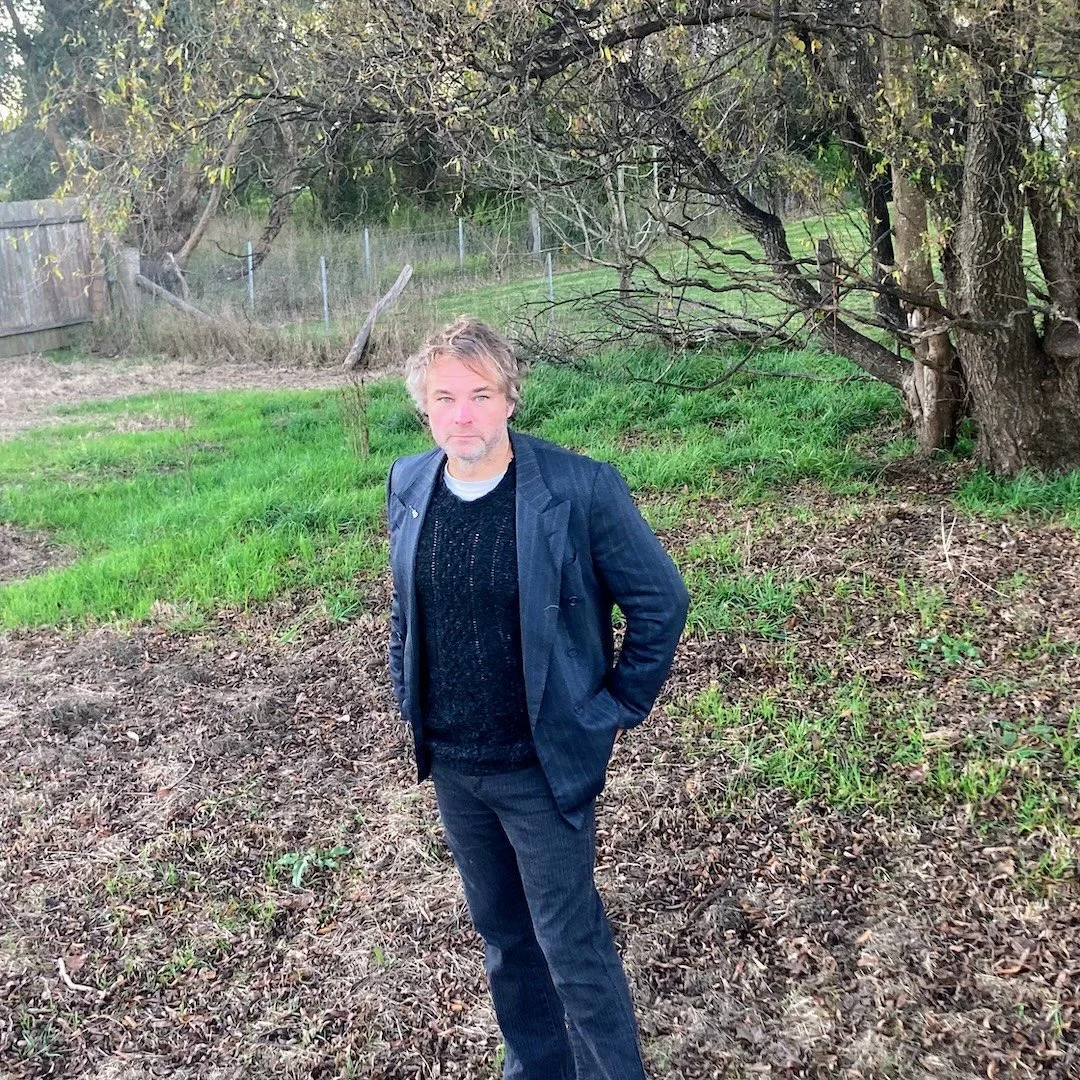
hat are the origins of Brigadoon as a project? How did it start?
Brigadoon started in around 2016 in the wake of a couple of other musical projects with other people dissolving. It was initially just a quiet and private solo, home-recording project just for my own satisfaction and for sharing with family and friends (and I like to think in many ways it still is). The first flurry of songs culminated in a first album, Itch Factor, which thanks entirely to luck got heard by a few more than the initial dozen or so I ever imagined it would. It remains firmly a DIY musical exercise, defined by trying to do a lot, with not very much – certainly in terms of equipment and technology, and perhaps talent too.
The name is taken from the musical, which tells the story of a village in the Scottish Highlands that only appears for one day every 100 years – there’s a great 1950s film of it starring Gene Kelly. I was drawn to the mystery and specialness of something only coming around every century, though in some ways I regret the name too – it’s awkward to Google because of that musical, and it has connections to Scotland I didn’t necessarily intend. People sometimes think it’s a Celtic folk thing or something. But that doubt and uncertainty somehow fit the music perfectly.
Tell us a bit about the new album ‘Everyone & No One’. What does it mean to you?
The album was recorded across four years in a garage in the Upper Blue Mountains, contending with freezing temperatures, a large possum that live in there and the sounds of the railway. It was therefore a bit of an unhurried project, to say the least. I also wanted this one to be defined by brevity and economy – Itch Factor was nearly an hour long so I wanted to make it less of a slog to listen to. I gave myself a rule that no song should exceed three minutes – I broke this on most songs, unfortunately, but it’s still a fairly short, tight affair at about 35 minutes.
With the benefit of hindsight, I can also see the album is very much inspired by and expressing the atmosphere and landscape of the Blue Mountains. This comes both in the somewhat ethereal nature of some of the songs, as well as the fact some field recordings from local spots make it on there: the trains, some frogs from the bush in Blackheath and some bellbirds. So it’s an album driven by the sonic spirit of place.
Are there any inspirations you look to beyond music when writing or performing?
Lots – there’s a song on Everyone & No One called “Norma Desmond”, who is the main character in the Billy Wilder film Sunset Boulevard, plus the Brigadoon name comes from a film, so I guess there is a link to cinema in there. A lot of literature also makes its way in, and I’m told the abstract nature of the lyrics is quite “painterly”, whatever that indicates.
And as above, I’m very invested in environment and the spirit of a place when writing songs, trying to evoke a sense of a moment within a landscape, under certain conditions and with certain emotional associations.
Name the five songs that have informed your song writing more than any others.
“Paint the Moon” by The Czars – John Grant’s songwriting is a particular favourite and this track from his old band, The Czars, feels like one I’ve tried to emulate a couple of times.
“New Mama” by Neil Young – also his “Pardon My Heart”. I feel like most times I sit down with a guitar it’s clumsy versions of these songs that come out.
“The Quiet Joys of Brotherhood” by Sandy Denny (written by Richard Farina) – the way the vocals are layered on this mostly acapella track is a revelation every time I hear it.
“But I Might Die Tonight” by Cat Stevens – the aforementioned three-minute rule was inspired by a song like this. It’s super short, but within that it builds and builds through repetition and added harmonies and instrumentation, arriving at a climax that is heavily emotionally charged. See also “Oh Well Okay” by Elliott Smith and “Till the Morning Comes” by Neil Young. I’m not a passionate Cat Stevens fan generally, but I love this song.
“Catherine Wheels” by Crowded House – Neil Finn’s most dizzying and mysterious song.
What Australian artists are you listening to at the moment?
The Triffids’ catalogue remains a source of immense fascination. I’ve also recently gotten quite interested in Severed Heads and the primitive electronica scene that spawned them. I’m not sure they count as Australian, but Schnell Fenster’s first album, and also a mention for Toby Martin and Youth Group, as I recently played a couple of gigs with him.
How do you hope your music might impact listeners?
I think it’s a miracle if anyone listens to it all. It’s a massive cliché, but that idea of being happy if only one person gets something out if it certainly applies to me. I’m often astonished anyone I don’t know has listened, let alone enjoyed it. I therefore have no real hopes or intentions for how it might impact listeners – however they take, if they do, is marvellous.