
A Quick Chat with Powloh
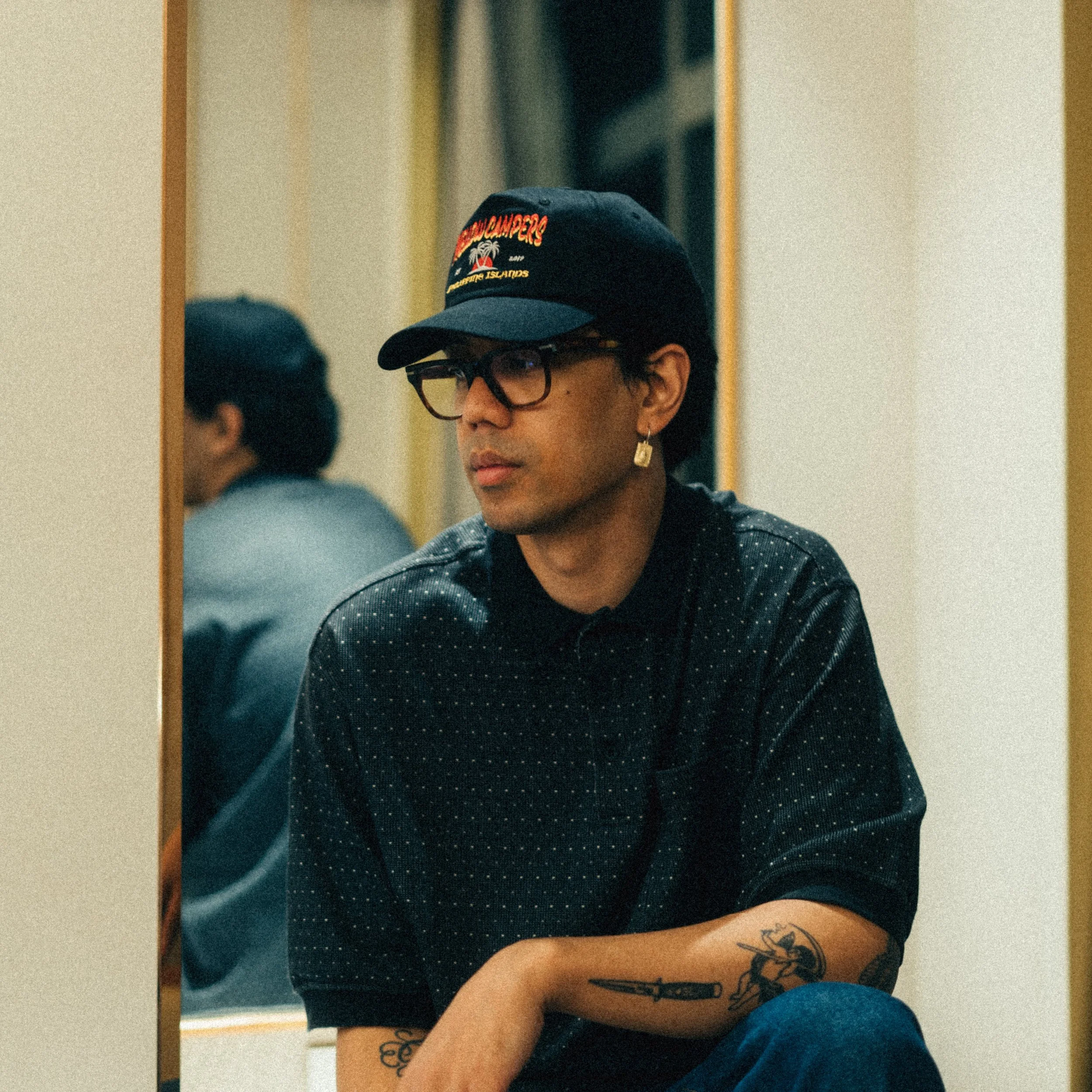
Your new EP Lonely Driver feels incredibly personal and cinematic, what inspired the emotional tone and overall concept of the record?
Lonely Driver came from an introspective place, spending late nights alone in my home studio, just sitting with my thoughts and letting the music take shape around whatever I was feeling in the moment. It’s a record about solitude, not in a sad way, but in a way that reflects the reality of my musical process – doing it on my own. Throughout the record, the guitar and production are just as important as the vocals. I intentionally left space throughout for the music to live on its own and to let the instrumentation carry emotion and meaning, even without words.
“In Bloom” is the focus track, it’s nostalgic, soulful, and beautifully understated. Can you talk us through the story or emotion behind that song?
In Bloom came from carrying the weight and quiet pressure of society’s timelines and its unwritten rules on the milestones that we are often expected to have achieved by certain points in our lives. It drew from the restless ache that came with thinking I’d be so much further in my life by now. I found myself reflecting on periods of adversity and the resilience and character that was built and formed in the wake of those defining moments that shaped who I am today. Upon my reflection I found the major flaw in society’s timelines is that it doesn’t often take into account our individual starting points or barriers. In Bloom not only explores these themes and ideas through the lyrics but also the song structure. There aren’t any repetitive choruses with the hook changing every time, and the spaces of guitar solos go against the basic rules of pop music writing. It rebels against the expected norms while seemingly running nearby.
You produced, wrote, recorded, mixed, and mastered the entire EP yourself. What was that creative process like? Did any track push you the most creatively or emotionally?
Doing it all has always felt like a natural workflow for me. The biggest challenge I often have to face is not having other people to bounce my ideas off or even help me through the moments when I get stuck. It does force me to dig deeper and over time I’ve found I understand myself quite well in those moments and know what I have to do in order to make up for the lack of a bigger team around me.
The track that pushed me the most creatively and emotionally would definitely be Meaghan’s Song as it was a completely new process for me. I had just proposed to Meaghan while we were in Tokyo. I filmed the proposal originally just for memories but the video was so beautiful we decided to use it as our announcement video. I imported the video into an Ableton session and made the song while scoring the video. We were still buzzing from our trip which felt like the most perfect fever dream. I set out to express what was happening in the video moment to moment through the music. This song also has an easter egg quiet nod to another song on the EP titled, I Don’t Want To Write A Love Song, with the lyrics following the title with “because they don’t ever do us justice.” Meaghan’s Song is pure instrumental, guitar lead lines sprinkled over spacious synths oozing nothing but emotion and a story that needs no words.
There’s a strong visual and narrative thread through the EP. How do your visuals and videos tie into the music, and how important is storytelling across both?
For this project, the visuals are a reflection of what my life is. I didn’t want to manufacture things that weren’t authentic or true to who I am. I can appreciate when artists like to play a character in their work or music videos but I wanted Lonely Driver’s visuals to feel real and honour the DIY nature of my music.
I work closely with my wife, Meaghan on the videos, and that collaboration has been really special. We shoot everything ourselves with the imperfections and grittiness being a part of the language. I think there’s beauty in low-budget, DIY storytelling when there’s heart behind it. To be honest there’s not a lot of planning that goes into our shoots. I Don’t Want To Write A Love Song was shot in my home studio and Falling Out With Myself was filmed in our lounge room but we tried to make it look like it could have been at a random location like a rehearsal studio.
The music videos for Ridin’ Round The City and In Bloom were probably our favourite types of videos to make. Pretty much run-and-gun style – we basically just head out, usually right before golden hour, and explore Melbourne collecting as many clips on the go as we can. I grew up getting into a lot of trouble and hanging out on the street and was heavy into graffiti and skateboarding when I was younger so I got around a lot. Often before shoots I’ll just close my eyes and visualise all the places and areas I can think of and eventually something will click and we’ll try it out. When it doesn’t work out we’ll just run around frantically chasing light until we find something. I love this process as it’s the challenge of uncovering the beauty in the places most people may not notice.
For me, the visuals are there to emphasise the moments in the music. I also use them to add more visual easter eggs and hidden messages to the song as my lyrics quite often have their extra hidden meanings too.
Lonely Driver blends soul, lo-fi R&B, funk, and classic rock influences. Who were some of the key musical inspirations or reference points during this era of your sound?
Before I went into making Lonely Driver, I gave myself some time to consume, analyse and learn from as much music as I could take in. In the lead-up to Lonely Driver I was listening to artists and bands like Mike Dean, Orville Peck, Black Pumas, B.B King, Dire Straits and Mac DeMarco to name just a few. An eclectic mix that paints the scape of influences and sounds that weaved its way into moments of the project, creating something genre-fluid but emotionally cohesive.
Then when I went into writing mode, I just allowed everything that had stuck with me during the previous process to fall out of me, letting muscle memory and instinct guide me. I’d pick up a guitar, and allow my hands to naturally reach for voicings, phrasing or tones that echo the moments I’ve been drawn to lately. It’s not a conscious reference, it’s more like a subconscious synthesis of everything I’ve absorbed. The way I bend a note or structure a progression is often rooted in the sonic language I’ve been living in.
From self-directed videos to behind-the-scenes TikToks, you’ve built something really independent and organic. How has the response from listeners and community radio shaped your confidence as an artist this past year?
It’s been kind of surreal to be honest. When you’re doing everything yourself – writing, producing, filming, editing – it’s easy to question if it’s landing. There’s no big machine behind it, just intuition and a lot of late nights. Stations like SYN FM, 2SER, Magic FM in the Philippines have really championed my music and I am so grateful. Community radio has this real heart to it – they listen with intention and take risks on emerging artists and aren't dictated by the corporatisation of art and music. It’s such a compliment as these are people who are so incredibly passionate and knowledgeable when it comes to music. The fact they are liking my music means a lot.