
A Quick Chat with Malaika
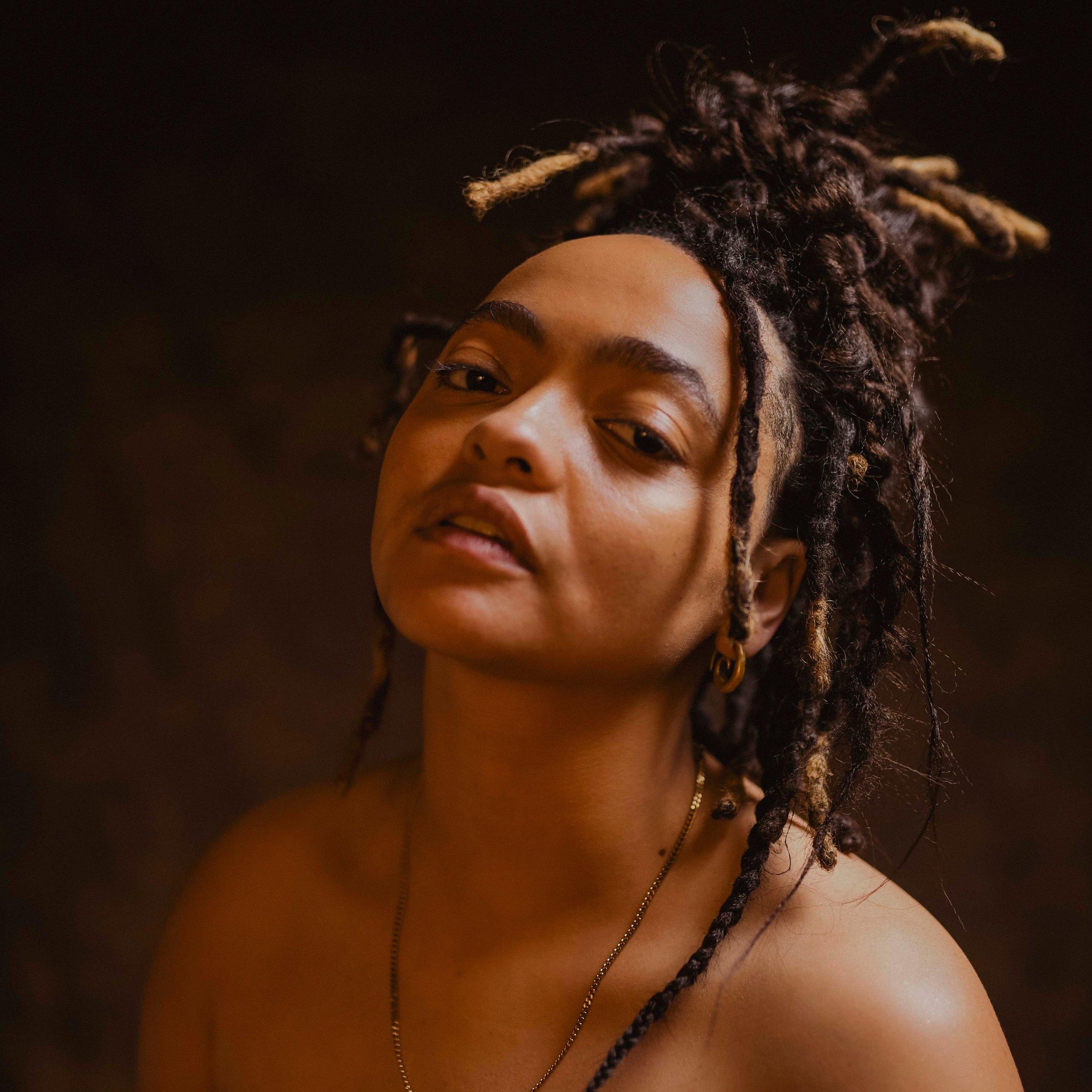
How did you get into music?
I started singing when I was about five years old in East African choirs, and then I moved between Australia and South Africa during that time. In Australia, I was doing more Western choral music, and in Johannesburg, I was singing in South African choirs. I did that from the ages of five to 13.
When I was 13, I started playing guitar. I was really into Tracy Chapman, so I began lessons with a classical guitar teacher. I stuck with that for about a year before I found this lovely sapphic jazz guitar teacher, who taught me for around two years. At that time, I was living in Canberra, but a couple of years later, I moved to Singapore.
In Singapore, I wanted to learn percussive guitar and styles like John Butler, but I couldn’t find anyone to teach me, so I decided to be self-taught. From then on, I mostly used tablature and taught myself through practice.
By the time I was 15, I had already been singing my whole life and working a lot with harmony. I’d also been writing poetry since I was about 10. When I was 13, I wrote my first song. I remember being really upset about something, and the song just flowed out of me with quickness and ease. That moment marked the beginning of my songwriting journey.
At 15, I started performing the songs I’d written for money, and I’ve never stopped. Fifteen years later, here I am, still making music.
What have been some of the highlights of writing and recording music?
I’m really big on collaboration now, though I avoided it for a long time. When I was living in Singapore, I couldn’t find anyone I felt I could really mesh with creatively. So by the time I moved to Sydney, I had become very protective of my craft. That made the journey feel quite lonely at times.
During my first few years in Sydney, I wrote a project called Sex and Politics, a mix of queer love celebration songs and political work inspired by movements like Free the Refugees and Me Too etc. I performed a lot at protests, which was incredibly fulfilling. I’d always been interested in activism, but never quite knew my place in it. Performing my songs at rallies allowed me to help activate and mobilize people, and seeing how music could move people so deeply around a cause became a really important part of my journey.
More recently, I’ve started opening myself up to collaboration and expanding my band. Those moments have become some of the highlights of my career. Learning not to be afraid of sharing, and finding collaborators I truly connect with, has been transformative. The music scene is so saturated with white men, so finding queer and PoC artists to work with has been deeply exciting.
Working with my producer Lunar, in particular, has been mind-altering. She changed the way I think about music. Through her, I became more open, willing to trust others with my songs. She showed me the value of finding people who care about your music, not to change it, but to elevate it.
It’s also been incredible to have people believe in me. Jannah from Offbeat, for example, really pulled me out of what felt like the middle of the ocean, where I’d been working so hard but still alone. Having that kind of support has been life-changing and mind-altering. When you have people behind you who genuinely care about you and your art, everything feels easier.
The releasing aspect of music is quite hard because there’s so much back-end work, but the moment I finally get to share a song with fans, friends, or family is so powerful and beautiful. Especially seeing how strangers respond. Many describe my work as healing, which means a lot. I started writing music as a coping mechanism, and it became my career. Writing, singing, and playing guitar have always been how I process emotions.
What’s most profound is discovering that what heals me also heals others. People tell me they feel heard, that their stories are reflected in my songs. It’s magic, really, there’s no other word for it.
Can you tell us a little bit about your song ‘Berlin’, how it came about, and who you worked with on it?
I wrote Berlin in 2022, while on a little Euro trip. I’d just been in France visiting family, and at the time a friend of mine was releasing music. I sent them a message saying how proud and happy I was for them, and they essentially replied telling me not to contact them while I was away. I found it really shocking, I didn’t understand why, and as a sensitive soul who deeply values chosen family, it was jarring and upsetting. It weighed on me during my time in France.
By the time I got to Berlin, I was in a really reflective space. I was going out a lot with my sister, experiencing queer Berlin, and meeting all these incredible people. Strangers were saying such kind things to me and meeting me exactly where I was at. It reminded me of Blanche from A Streetcar Named Desire, the idea of relying on the kindness of strangers. That sense of acceptance from people who didn’t know or judge me was so healing, especially after feeling rejected by someone close.
I realized that I could reclaim parts of myself I thought I had lost in grief back in Sydney. That feeling became the heart of the song. The pre-chorus lyric “I don’t like myself in the city anymore / I don’t know what the hell I’m looking for / Maybe I won’t apologize for who I am / In a place that don’t give a damn” still really resonates with me.
When I first arrived in Berlin, I actually lost my passport and briefly thought, maybe I’ll just stay here, it’s not like I’ll be missed in Sydney. Of course, I knew I would be, but that reflected where I was mentally at the time. Then I got COVID, which meant two extra weeks in isolation, and that’s when I wrote Berlin. With nothing else to do, I created my most complex guitar riff, one of my favourites to this day, and the song flowed from there.
When I returned to Sydney, I showed it to my friend and producer, Lunar Martins. About a year later, we recorded it together in the studio. She added those extra guitar licks you hear and fleshed out the drum part. One of my favourite aspects of the track is the final chorus: I invited some of my closest friends in Sydney to sing it with me. It was written to feel like a concert moment where everyone is singing along, so having the voices of friends who’ve always loved and supported me on the recording means that love and friendship are now woven into the song forever.
It’s off your EP ‘Unfurling’, how does this body of work differ from your album release?
Unfurling is based on a cabaret I wrote. It brings together these singles, starting with Berlin, woven with soundscapes and poetry that tie each piece together.
My last album Yasmin was centred on the loss of my partner. It explored grief, love, life, moving through pain, finding joy, and connecting with nature, all through the lens of grief. This new project is about life and love after grief. Berlin is about losing myself in that heaviness and then coming out the other side, strong enough to ask: how do I want to change, and how do I bring back the parts of myself I lost, the spontaneous guy, the lover boy, the fun-loving clown?
Other songs dive into different aspects of that. Thirteen is about friendship breakups, which I think are so rarely spoken about, even though they can be more painful than romantic ones. I’m friends with all my exes, so the relationship isn’t ending just shifting. But when you lose a friend, it feels like unnecessary grief, because you know it could be worked out, but it hasn’t been.
Then there’s The History of Me and You, which reflects on the small moments that turn out to be the most beautiful times of our lives. It’s about enjoying what’s in front of you and seeing the scars and tattoos on our bodies as a trail of stories, each marking a piece of our history.
So while Yasmin was about grief, Unfurling is about rediscovery, joy, and healing.
You have an animation to accompany ‘Berlin’ can you tell us a little bit about the inspiration behind that?
I wanted to capture my time in Berlin, and that just wasn’t possible with a regular music video without actually going back there. So I came up with the idea of making it animated, because I wanted to really capture the essence of the place, the vibes, and the kinds of people I was meeting. I also wanted it to be joyful, playful, and cute, since Berlin is this upbeat folk-pop song.
It was important to me to feature some of the amazing queer people I met while I was out partying, because they helped me find lost pieces of myself. The video pays homage to them, and to the city that helped me start rediscovering who I was. At the time I hadn’t had top surgery yet, so I was excited to animate a version of myself that reflected the body I have now, placing the self I’ve grown into in the city where I felt that transformation begin.
The animator, Tenthdan, was incredible to work with and really brought it all to life. We included so much of what I was doing there, going to the Queer Museum, partying at Kit Kat, riding scooters everywhere with my sister. That detail was especially meaningful because I use an electric scooter as my mobility aid back home, but they’re illegal in Sydney. In Berlin, the accessibility felt amazing. So a lot of the video is just me zooming around on a scooter past all these places, which is very true to how I experienced the city.
My favourite part is the ending. When I was stuck in Berlin with COVID, I was really sick and isolated, but I happened to be staying near an outdoor concert venue where Vance Joy was performing. I could hear one of my favourite songs while I was writing Berlin. It felt like this surreal free concert, even though I was sick as a dog. In the animation, we recreate that, panning from me alone and unwell, to me playing Berlin on a huge stage. It’s both a memory and a manifestation of the bigger stages I dream of.
It was also really important for me to include my band. Lunar Martins, who produced the track and used to play bass with me, had to retire from music last year due to illness. So in the animation, she’s forever on stage with me, playing alongside my drummer Billy Hunni and my dear friend Scout on keys. Even though Lunar won’t be able to play with us in the future, this video means she’ll always be with us on stage.
So the animation is a snapshot of that time, a love letter to Berlin, and also a way of solidifying the people, places, and dreams that shaped the song.
What do you hope people get out of from listening to your music?
I hope people feel heard and connected. There’s something incredible that happens when we travel, we become unburdened by the selves we are in the cities we live in, and we’re able to access new and exciting parts of ourselves, or even old parts that resurface. That’s what Berlin gave me, and I love that the song can offer that same kind of healing and self-discovery.
I hope people continue to find healing through my music, but also joy. Berlin in particular is fun and joyful sonically, even if the lyrics are a little sad (just don’t listen too hard!). More than anything, I want my music to create a sense of light and community, a space where people feel seen and held.