
A Quick Chat with Jean Elliot
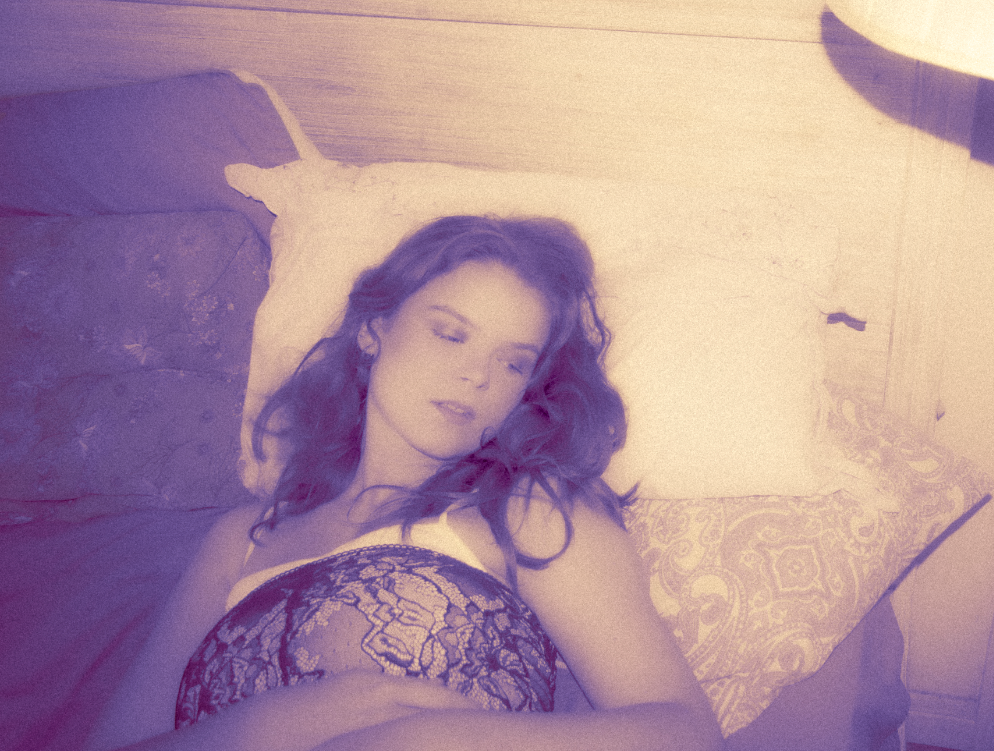
‘This Room’ explores the idea of what happens behind closed doors, touching on
violence and the bystander effect. What drew you to telling this story through a
fictional character, and why was this the right moment to confront these themes?
I think I was sick of writing in such an autobiographical way, and found that I gained so much
more through translating my experiences into fiction and transforming them into something
beyond me. When it came to writing ‘This Room,’ I was writing about the death of this
character I had created. It was the first song I had written for her, which initiated a lot of soul
searching into why I felt like her death was the first aspect of her story I was drawn to. That
led me down a rabbit hole (no pun intended) through this character’s emotions. Her
loneliness, her helplessness, her disappointment in others for leaving her to her fate. It was
all incredibly real and relevant to the experiences of so many people who are subject to
violent tragedies. It felt like the right moment to confront this due to how quickly the story of
the whole project felt like it clicked into place once I got to the crux of why detailing her death
in ‘This Room’ felt so important. It got me started on expanding her character into more than
just the rabbit we see, (hunted, running) into a complex individual with agency, hopes, fears,
spite, and a voice.
The track speaks to wilful ignorance — neighbours, media, elected officials looking
away. What personal or societal moments helped shape the emotional backbone of
this song?
This year, I felt like every day the news would play on my television, there'd be yet another
woman and young woman subjected to gendered violence, or killed. By a man with 11
previous domestic violence charges, kidnapped, stabbed by ex-partners, current partners.
Or maybe it’s gang sexual violence committed by four teenage boys. We don’t like to say
these words, we don’t like to talk about it as much as we think we do. And it sickens me that
this is almost accepted as normality as of late, though there is a clear spike in concerning
behaviour in especially young boys. Music may never be enough to ‘sum up’ or truly bring
light to the way violence is such a deep-rooted issue for Australian culture, both gendered
and racial. In saying that, it is very clear that no amount of conversation or grief can push the
wider public to priorities change in the face of an evidential rise of domestic/gendered
violence cases in this country these past few years. Every avenue for conversation is a good
one, hence doing my best to communicate my feelings on the matter through this song.
You reference The Blue Dahlia and Twin Peaks throughout the track. What is it
about noir and Lynchian worlds that resonates with the story you're telling?
There’s a particular atmosphere to both these examples of cinema that I wanted to channel
through ‘This Room,’ that mystery, intrigue and uncertainty, the soap-opera plots and
dialogue. My reference to The Blue Dahlia in the first verse was due to its dubious
connection to the real-life murder of aspiring actress Elizabeth Short that occurred a year
after the film's release, (possibly the reason she was nicknamed ‘The Black Dahlia.’) It
offered me a really quite convoluted way for me to reference the blurring of fiction and reality,
and the nature of an unsolved murder. When it comes to Twin Peaks and David Lynch, I
could write a dissertation on the inspiration they have provided me. For this song, I used a
line from arguably one of the most impactful scenes of the series; ‘It is happening again.’ I
used the line as the motif of the song to invoke this horror of endless repetition. The
relationships in Twin Peaks are so intricate and encoded with heartwrenching sentiment. It’s
one of those pieces of media that will endlessly serve as inspiration for artists, not only due
to the vast detailed world created, but how deeply one can immerse themselves in the inner
world of each character and their unique relation to others.
Despite the fictional framing, you’ve said the song reflects the experiences of
countless women. How do you approach honouring real-life truths while still crafting
a symbolic, narrative-driven world?
A lot of the Preycatcher story has been written from a very personal and passionate place,
and it was in writing ‘This Room’ that I came to the realisation that the protagonist’s ending is
not unique to her or my own situation. Though the story is this narrativised, fantastical folk
tale of animals and witch-hunts, the idea of being caught by somebody that has been
hunting you does not just resonate with prey animals, but women, who are often treated like
them. It was then very important to me to ensure that I spoke to that. I spent a lot of time with
these lyrics, writing and rewriting, to ensure that the right sentiment came through. ‘Til the
bodies bend the floor’ is a purposefully graphic choice of lyric, that is at once consistent with
the horror themes of Preycatcher, and a sincere reminder that as isolated incidents amount,
ignorance only becomes more and more wilful. It would have been ignorant of me to ignore
the real-life truth inherent to the story I was telling with ‘This Room.’
The song follows a character’s death in harrowing detail. Was writing from such a
bleak emotional vantage point creatively cathartic, or did it weigh on you?
Preycatcher as a project certainly has a harrowing element to it, but I find that this doesn’t
weigh on me when I have the responsibility to grant the characters I’m creating their rightful
endings. For the protagonist, her death is a culmination of her life, and her final act of
strength and resilience in the face of what could be viewed as ‘inevitability.’ I think it has
been cathartic to explore that idea, as someone who feels helpless without control. It feels
satisfying to craft her an ending that while bleak, is emotionally heightened and indicative of
a bigger picture. The gloom of the Preycatcher project has never weighed on me, as I’m so
invested in the progression of each character within this world that it matters more how
intricately I weave these notions of horror into their story, rather than how bleak it is. I also
believe I can achieve more, and have more to say, by not shying away from the harrowing
aspects of a story that is centered around the processes of the cruel natural world.
How does ‘This Room’ expand or deepen the mythology and themes listeners will
encounter across the Preycatcher project?
Preycatcher is, at its bare bones, a story about hunter and prey, exploring all the
complexities that characterise that relationship. Said relationship is not so black and white,
with a witch-hunt enlisting a reluctant hunter who must commit to the lies he told about the
rabbit or face social rejection, and a resentful rabbit who, while running for her life must
confront love, grief, survival and nature before her death. ‘This Room’ is their last stand off.
The ideas of love, inevitability, horror and acceptance find a strong conclusion here after
many songs that delve into their intricacies. ‘This Room’ acts as a congregation of so many
fears and concerns the rabbit is faced with, as if rushing at her in her final thoughts. I
released it as a sneak peak into her psychology, the perfect taste of what is in store. I can’t
wait for people to see what Preycatcher has to say.