
A Quick Chat with Julian Belbachir
Your new single “Aye Willy” translates to “Stand Up”. What sparked the song, and who or what is it asking to stand up?
“Aye Willy” is a call to all people to stand up and stand together. It’s a call for unity, brotherhood and solidarity.
People in Mali are facing many difficulties due to the instability in the region, as are people in many parts of the world right now. The song is a reminder that, despite the challenges we face, we need to come together, support one another and work towards reclaiming peace and a sense of common unity.
For me, it’s about looking beyond our differences and recognising our shared humanity. It’s a message that feels just as important today as ever.
You’ve teamed up with Mamadou Kouyaté on this one. How did the collaboration come about, and what did he bring to the track?
I first met Mamadou in Bamako and was very fortunate to be introduced to him. We immediately bonded over music, and he shared some of his memories of touring Australia with the late, great Toumani Diabaté, when he was the lead singer of his Symmetric Orchestra.
I had actually seen Mamadou perform in Australia and had been a big fan of his work, so having the opportunity to collaborate with him was incredibly special for me. He’s one of Mali’s most respected griots, and I felt very fortunate to have the opportunity to work together.
What really amazed me was how naturally he connected with the modern production and the different elements I bring into traditional West African music. He understood the direction straight away and brought his own incredible musical character to it. As soon as he heard the music, there was an immediate connection, and we both knew we had a song together.
The video was made by Tom Fisher (Extra Mentalist). Where did the idea come from, and what was the shoot like?
I actually shot the original footage myself while travelling through Mali. There are restrictions around filming, so I’d bought a very small hidden camera and discreetly captured as much of everyday life as I could during my time in the country, while being mindful of local laws and making sure I didn’t create any problems for anyone.
I collected all this footage, but I always felt it needed something more to really bring it to life. I wanted to collaborate with Tom Fisher and utilise his incredible animation and design skills to create something that really represented the music.
The idea was to bring together the authentic footage and traditional cultural elements with a more modern, psychedelic visual approach, much like the music itself. Tom did an incredible job of taking what I’d captured and transforming it into something completely new.
“Aye Willy” follows your debut single “M’Bara Meskin”, and both lead into your album The Golden Light. How does this song fit into the album’s journey along the trade route from Mali to Morocco?
Both songs connect to the ancient trade routes that historically linked Mali and Morocco across the Sahara. The album is really about exploring those cultural and musical connections, drawing inspiration from the ancient melodies, rhythms and traditions that have travelled along these routes for centuries.
There’s also a particular feeling I’m trying to capture throughout the music — that special atmosphere at sunset in North and West Africa. There’s something quite magical about that time of day, and I wanted to translate some of that feeling into the music.
The Golden Light is my way of paying homage to these traditions while bringing them into a contemporary musical world.
You spent around four years living in Essaouira. What’s one thing about life there that found its way into your music?
I think it’s the essence of community, culture and the role that music plays in everyday life. Living in Essaouira gave me the opportunity to experience music as something that’s part of daily life, rather than something that’s centred around performing or the music industry.
There’s music happening all around you, within the community and through everyday interactions. Being immersed in that environment has been a huge source of inspiration and creative energy for me. It encourages you to explore, experiment and create interesting new music.
You play a range of traditional North and West African instruments. What’s your favourite to play, and which one gives you the most grief?
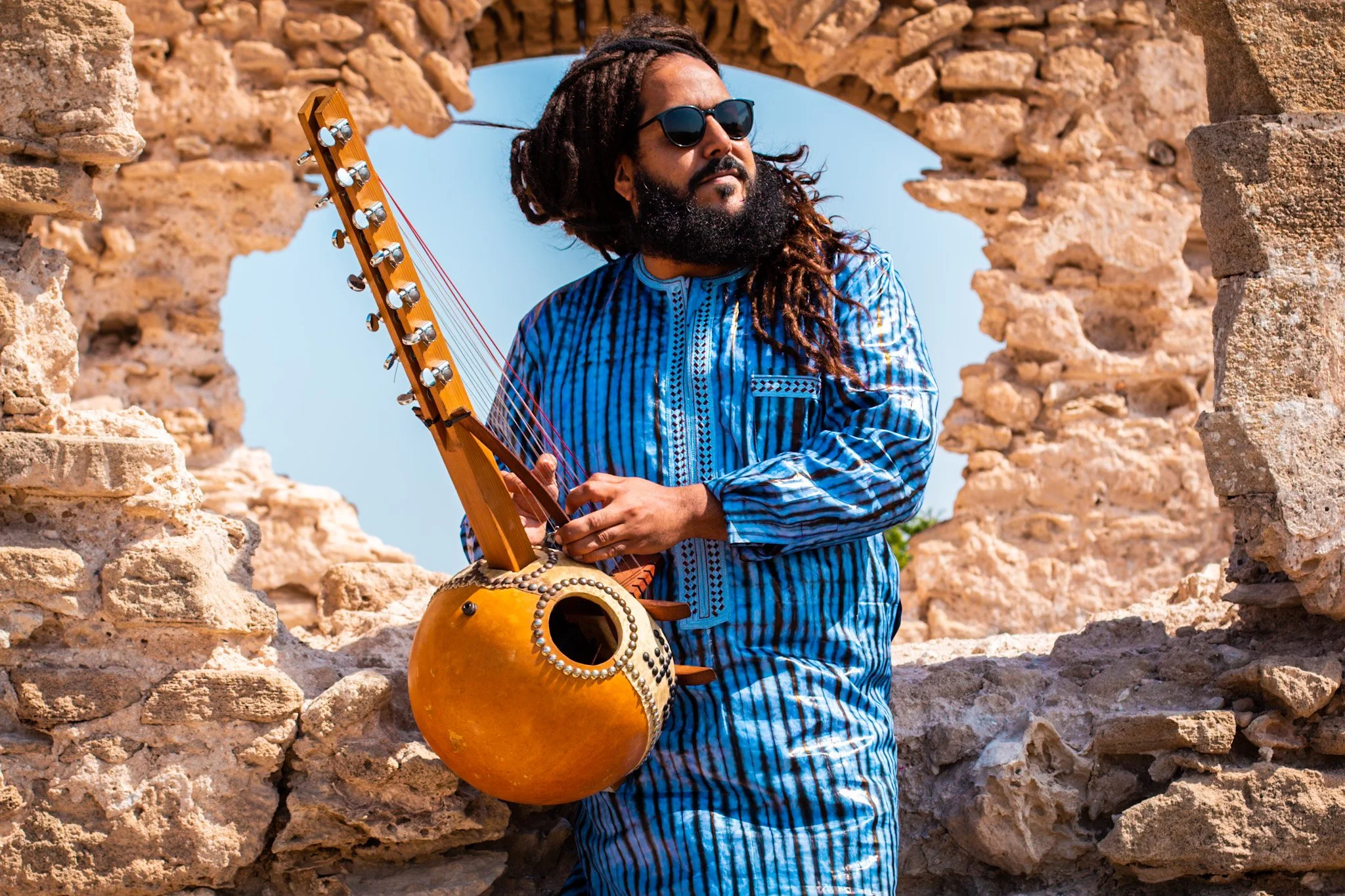
The kamele ngoni is definitely my happy place. It’s the most generous instrument to me. It has such a special way of helping me compose and create new music, and playing it brings me a lot of peace, both creatively and spiritually.
As for which instrument gives me the most grief, honestly, none of them! They all have their own personalities and allow me to express different parts of my creativity. I feel very fortunate to have such a relationship with these instruments.
From touring the world with OKA to going solo, you’ve had a big few years. What’s been your biggest pinch-me moment so far?
I’ve been fortunate to have some incredible experiences over the years, from touring the world with OKA and performing in more than 38 countries, to working with amazing musicians across different cultures.
Producing Andrew Gurruwiwi Band’s award-winning album and my ongoing musical collaborations in Canada with Leonard Sumner have both been really special parts of my journey. I’ve also had the privilege of receiving the Ftour Pluriel award, a prestigious recognition presented by André Azoulay, Senior Advisor to His Majesty King Mohammed VI. Having the award presented to me by Australia’s Ambassador to Morocco, Damien Donovan, was a particularly special moment.
But I think my biggest pinch-me moments actually happen in the process of creation. It’s when you’re in a room with musicians from different backgrounds and musical traditions, and suddenly everyone connects around a common vision. When the music starts flowing and something genuinely special happens between people, that’s the real magic for me. Those are the moments that make everything worthwhile.
Be honest, what’s the strangest thing that’s happened to you on the road, either touring with OKA or travelling across the Sahara?
In March this year, I was up in North East Arnhem Land producing the new album for Yolngu elder Andrew Gurruwiwi. We were travelling out to some of the homelands, which are very small Indigenous communities, when things took a pretty unexpected turn.
We managed to get two cars, both full of music equipment, stuck in a river infested with giant saltwater crocodiles! We had no phone reception, no way of getting the cars out, and were a very long way from anywhere. The closest city was in Timor, so we were pretty much on our own.
Luckily, we came across a tiny homeland community of around 15 people who really looked after us. They gave us somewhere to sleep, fed us and welcomed us into their community. We ended up staying for three days while we worked out how to recover the cars.
During that time, we organised a little concert for the community. It was a really beautiful experience. We had gone out there to make music and ended up being welcomed and looked after by people we’d never met before. Being able to share our music with them was a lovely way to give something back.
It was a pretty wild adventure, but what I’ll remember most is the generosity of that community and the way music brings people together, even in the most unexpected circumstances.
What’s on the Julian Belbachir bucket list for 2027?
I’m really looking forward to sharing some very special performances in 2027 that give people a deeper insight into my musical universe and the cultural influences behind my music.
I’m excited about travelling with my brothers, sharing our music in different spaces and environments, and connecting with communities along the way. For me, it’s not just about performing; it’s also about the opportunity to share, learn and discover more through music and human connection.
I’m looking forward to creating new experiences, building relationships and continuing to explore the incredible musical connections between cultures.