
A Quick Chat wtih Nicole Issa
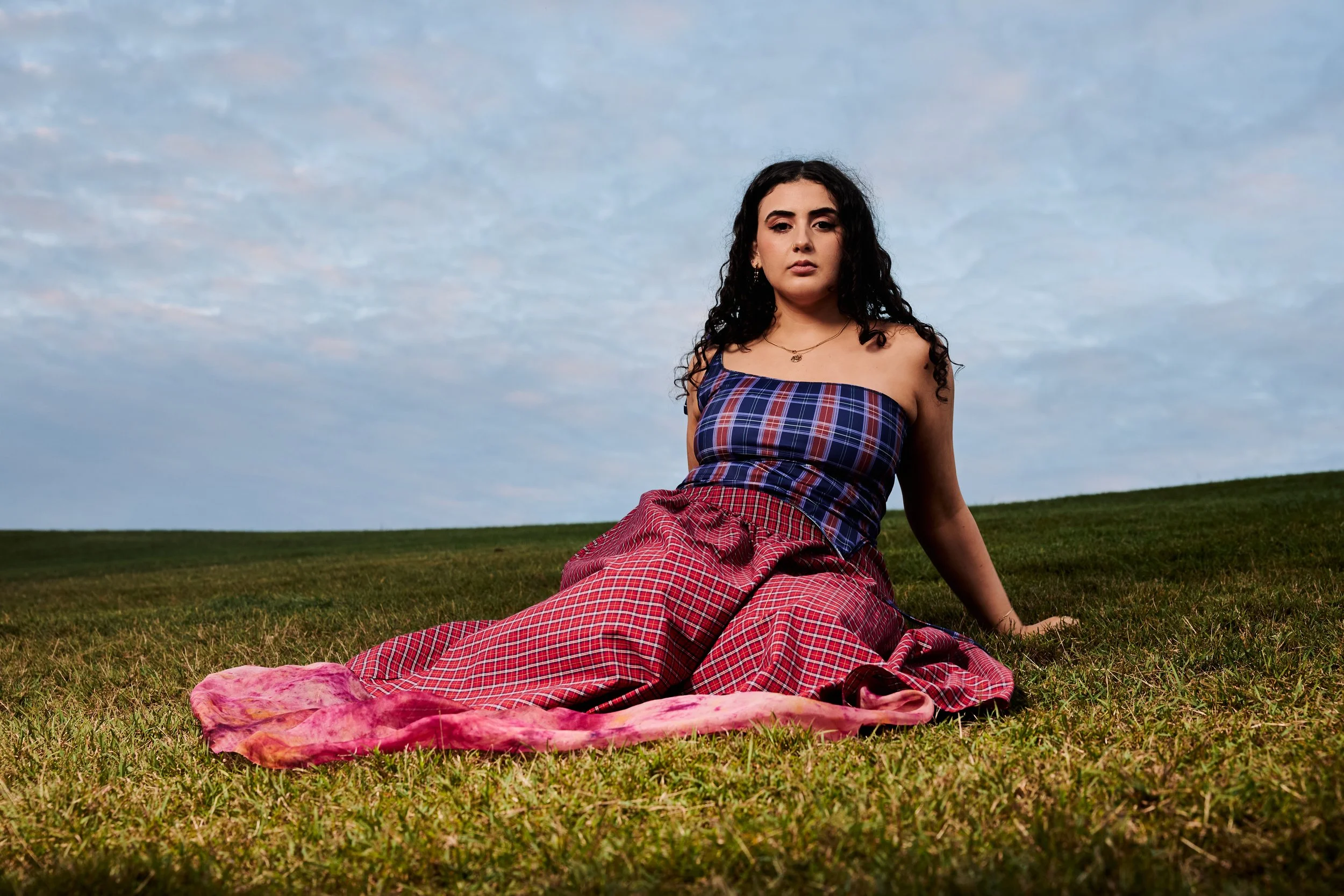
Congratulations on Bring It Back To Me — four years in the making! Now that it's finally about to be out in the world, how does it feel to let go of a project you've been carrying for so long?
It feels so fulfilling. The ability to make and release music is such a privilege and is something that I remind myself of every day. There was a time when I didn't have any money or any support, and I didn't even know how to release music.
Making this EP, I went through three heartbreaks, two chronic illness diagnoses, so many tears, and four different day jobs, and now we're here! It also feels sooo scary; I have done everything I can that is in my power, and now it belongs to the world! I just hope it connects with people the way it has connected with me.
The EP traces a journey through chronic illness, heartbreak and self-worth. Was there a particular song that was the hardest to finish writing, and why?
Totally, I think the hardest one to finish writing was Cliché, the song about a crazy whirlwind long-distance relationship I was in, mostly because it never felt like there was a definite "end" to the relationship. We were on and off the entire time. Not talking, then talking again, then confessing we loved each other, then complete silence, and then an opportunity to go back to his country and possibly see him again despite us not talking. So the song kept changing as the situation kept changing. I think that translated really well in the end, especially around the bridge of the song - musically, it really reflects how chaotic this experience all felt.
The title track began as a song about ambition and chasing dreams, but you've said it took on a whole new meaning over the years. Can you walk us through that shift?
Bring It Back To Me, at first, was a song about following my dreams and wanting the music dream so bad. The thing is that over the past couple of years I have been on a massive journey of discovering myself, and a big part of that has been understanding my people-pleasing tendencies.
With lots of therapy, I found out my people-pleasing was actually a common masking tool for women with ADHD, especially women who are diagnosed in adulthood. One thing about me is that I have always chronically made sure everyone around me was okay before worrying about my needs. Unfortunately, that led to a lot of unhealthy relationships over the years where people expected a high level from me because I never said no, and there was this unequal balance where I was overgiving just to feel worthy.
I learned about boundary setting. I learned how to say no. I learned how to ask people for help or support when I needed it. I learned to listen to my internal cues of burnout, and to hold my personal boundaries without breaking down. The song came to mean that for me. It was a reminder to put myself first, to always look inward before looking to the world for validation, and to live your life for you and not anyone else. At the end of the day, you are doing this for no one else but the little 5-year-old girl who would daydream at the back of the classroom about the life you have now. Yes, I am loud. Yes, I am too much for some people, but that is okay, and I need to unapologetically be myself.
'Drink The Same Alcohol' comes from the end of your first long-term relationship - was it hard to revisit that headspace once the song was finished, or did it feel more like closure?
SO CRAZY AND STRANGE HAHA. I wrote that fresh after the breakup years ago but never finished it till 2023. I have no hard feelings toward my first boyfriend; I am seriously so grateful for all the memories we had, and I am also grateful he introduced me to Roku Gin (the alcohol I still drink now… sponsorship?). It felt like more nostalgia than it did closure. When I revisited it, I wasn't affected by the breakup anymore, and honestly, it's really hard to finish a breakup song when you've got zero heartbreak left in you! So I ended up drawing from more recent experiences to finish it. I just loved the concept of the song, so that's why I held onto it for so many years.
You've described this as a coming-of-age story that happens in your twenties rather than your teens. What do you wish someone had told you about that "second coming of age" before you went through it?
Girl, focus on you and stop worrying about making everyone around you happy. It will help with a lot of your relationships!!!
You're going to learn heaps about boundary setting, and it may hurt, but it's a good thing. You don't need to have it all figured out yet; a lot of people don't until WAYYY later. And when your frontal lobe develops, it's going to be such a strange feeling. Also, there's no one path you NEED to follow. Everyone has a different one, and it doesn't mean you're behind. So maybe the arts thing doesn't make you money, but it gives you happiness, which a lot of people don’t have, surprisingly!
Live From The Area is such a personal way to accompany the EP - what made you want to film in the actual neighbourhoods and family homes that shaped you, rather than treating the visuals as separate from the story?
The Area (a colloquial term for Western Sydney) is my home. I am a Lebanese girl from Western Sydney, and I spent my whole life trying to run away from that identity. I dyed my hair blonde and straightened it, ashamed of my identity and the negative press around my culture and area. I would tell people I was from the Inner West instead because I was ashamed. It also didn't help that a lot of parents didn't let their kids come to my house during school because of where I lived.
Just because it is a lower socio-economic area, our communities are villainised in the media, and there is clear prejudice, but the truth is we have the best people, beautiful communities from around the world and bro, we literally have the best food. My Bahn Mi's are CHEAP ($7, to be exact!) That's why it was so important we did this series; to show the world where I am from and document it. I never saw anyone that looked like me in music, and representation is so important; it tells young people from similar backgrounds that they do belong and should take up space.
I wanted to humanise "The Area" and give a new perspective of the place that has been dehumanised for so many years.
You've had support from BBC Radio 1, triple j, Ones To Watch, Earmilk and more amazing international outlets, and you've toured with Sofar Sounds - has that outside recognition changed how you think about making music that's this personal?
I know this isn't healthy to think, but these little moments make me realise, "OMG, cool people can relate to you and your story!!" The external validation filtering into my sense of being on the right path isn't the healthiest, but being a musician is always so hard, and for a long time it feels like you're not going anywhere, or no one is listening to your stories and songs, so having these key moments is important. It's reassured me that vulnerability resonates, that I am on the right path, and that's made me want to keep being this open in my music, not less.
Also, having people from the other side of the world tell me they love my songs and relate to my stories is so crazy… it is literally everything I have ever wanted. I really love when people tell me how they feel about my music. I want to know the who, what, why, when, because I don't get to see it all the time. Maybe that's why I love performing so much; you get to see the reactions in real life!
Your tour for 'I Don't Know Myself' raised funds for Endometriosis Australia. What made you want to tie your music directly to that cause, rather than keeping it separate from the songs?
Doing music can feel so egotistical sometimes, and to be honest, I needed a reminder of WHY I write and release music. I make music to share stories and try to leave the world a better place and hopefully make a small change. The song "I Don't Know Myself" on the EP is about my journey with endometriosis and body image. Endometriosis and period pain affected me for so many years, but I always dismissed it, thinking it was normal. I even remember doing my HSC with a heat pack, and no one questioned it!
The way everyone dismisses women's pain is so normalised. I didn't realise how many women go through the same thing until I spoke about it publicly and had people start telling me their stories. Bringing more awareness to endo and women's health issues is SO IMPORTANT, especially because most stories always start with medical dismissal.
With the EP produced by producers such as Christian, Andrew and Dom, what was it like handing over songs this personal to someone else to help shape sonically?
Man, it takes the right person to be able to put into practice what you are describing sonically about the ideas in your head. There's definitely an element of trust in that - it's scary at first, but once it just gels, you just feel it. I've worked with creatives before where it doesn't feel safe, and I can normally tell instantly. But with each of these people, I felt safe from the first instance. So I am so grateful for the incredible producers on this EP.
Most of the EP was produced by Christian. We have such an incredible connection and music relationship. We like similar music and nerd out over the same things, and always end up ending a session with a new idea, leaving on this cliffhanger of like, "OMG, WHEN AM I GONNA SEE YOU SO WE CAN FINISH THAT IDEA?!" Bringing my songs to him and him taking them and running is the best. So grateful for him!
Andrew is so talented. He comes from a more R&B background, but we have had such incredible chats over the years and have become dear friends. Being in the room, opening up about the deepest things I am going through, he knows how to hold space and to really let me do my thing.
Dom is such an incredible engineer as well as producer. His attention to detail is incredible, which is why the folky parts of the EP were done by him. Having that organic touch was so special, and having someone who understands those little parts that I don't understand really took Cliché to the next level.
I also want to shout out the incredible co-writers on the EP: JËVA, Bri Clark, Vendulka Wichta, The Happiest Kind of Sad.
Once Bring It Back To Me is out and you've played the launch show at The Lord Gladstone Hotel — what does "home" look like for you next, creatively?
Yes, I am so excited!!! I miss playing live, and I get to play with my full band! Yayaya! So funny you used the word "home". Home was the name of my first single, and it's a big theme across my music.
I started my journey with just me and my acoustic guitar, listening to folk music and writing that way, so I'm feeling the urge to go back to that way of writing again. Maybe that's what home really means to me now: “bringing it back” (pun intended) to where I started, just me, my guitar, and a story. For my next work, let's just say those OG folk writing chops might be coming back eyes emoji.