
A Quick Chat with The Goldhearts
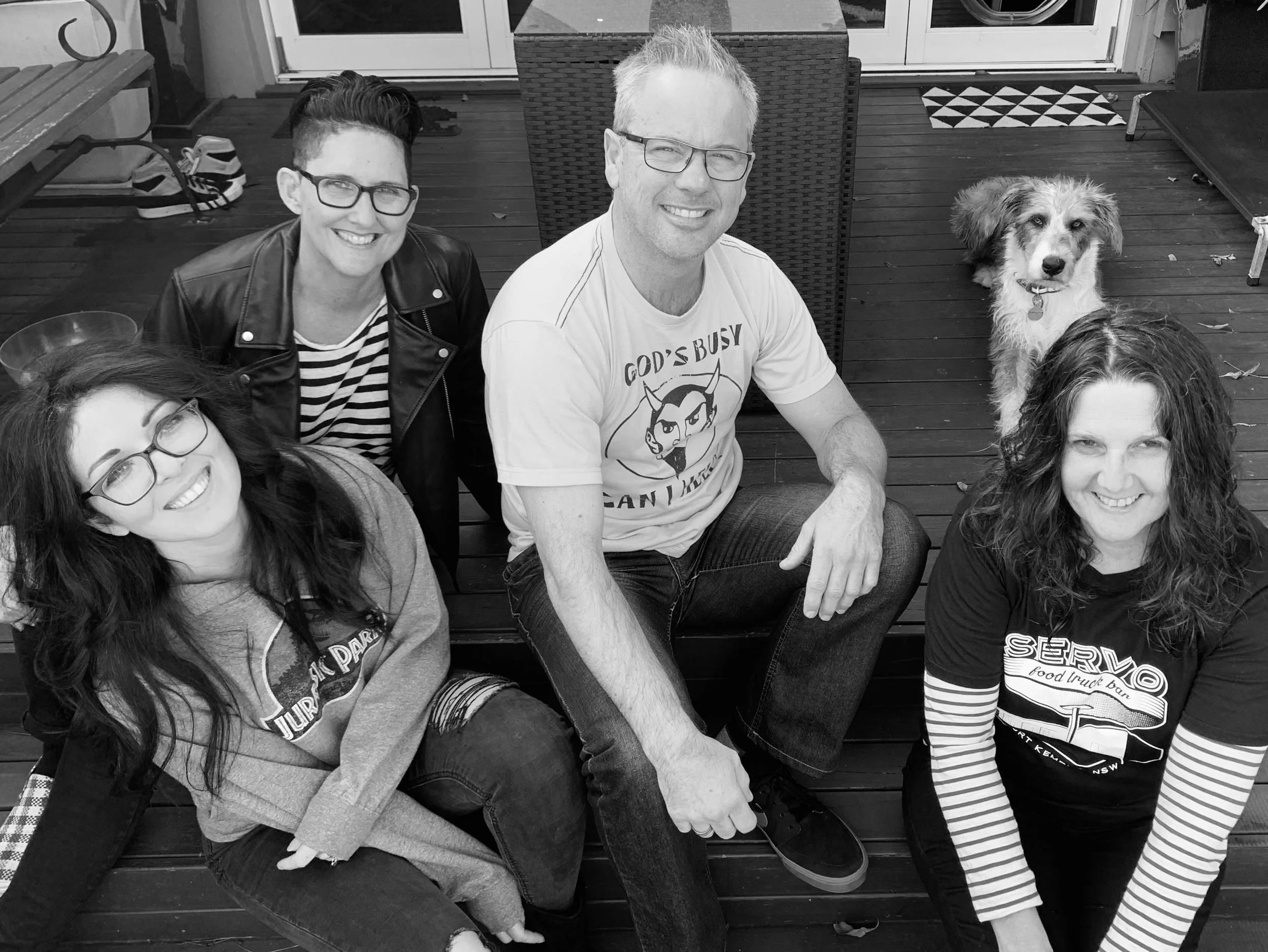
After a four-year break, what inspired The Goldhearts to return with Original Nation?
Good question… our drummer Claire had a baby boy, so we settled back for a while and had a little breather as we had been fairly productive for quite a while. It's likely we went on some holidays lol, but we did a few gigs and a bit of writing, including Original Nation. Claire's little guy has now been to a couple of our gigs and loves watching his mum play the drums. 🪘
How would you describe the sound of Original Nation in three words?
Devastating. Apologetic. Hopeful.
What was the first spark that led Margy to write Original Nation?
Like many Australians, Marg undertook Aboriginal cultural training in the workplace and, like many of her colleagues, she was deeply affected by what she learned. She also watched Frontier Wars by Rachel Perkins and heard on the radio about the Australian Massacre Map, a research project at Newcastle University identifying massacre sites in colonial Australia, where a colonial frontier massacre is defined as the deliberate and unlawful killing of six or more defenceless people in one operation.
The map now documents over 400 massacre sites, but at the time she wrote the song it was around 250. Margy was shocked and horrified, not only by the truths of colonisation but also that these truths had not been taught in Australian schools in the past. We hope this has changed, but understand there is still plenty more room for progress.
Most importantly, truth-telling is part of the reconciliation process because it provides an opportunity to learn and acknowledge the reality of colonisation, and to understand the violence, seriousness and range of harms caused by it. Though devastating, these truths can inspire many people to become part of the reconciliation process.
Many people who didn't learn these truths at school, like Margy, learn them later through workplace cultural training, films, television and other sources, so it's never too late to learn the truth about the past.
Why was it important to release the song around National Sorry Day and National Reconciliation Week?
We wanted to participate in the processes of Sorry Day and National Reconciliation Week, as they both provide an opportunity to be part of and share in an Aboriginal-led process that prioritises creating space and time for reflection on the many aspects of colonisation that are relevant to all Australians. Ultimately, it's an opportunity to work towards the constructive and positive goal of moving forward together.
What role does First Nations youth artist Eliza Champley's artwork play in the release?
We had hoped to invite an Indigenous artist to create the artwork for the song, and Trace was able to connect with Eliza through her workplace, as Eliza is the daughter of one of her colleagues.
The artwork is so beautiful, and when we first saw it we were overwhelmed with a sense of awe, especially knowing it was created by such a young artist. There is a profound, radiant light that shines through what is essentially a very sad story. To us, that light represents a spark, creating pathways we can walk together as part of reconciliation.
Looking back on ten years as a band, what achievement are you most proud of?
On a musical level, we are very proud of being played by Rodney Bingenheimer on KROQ, which resulted in our first single charting on the FMQB Alternative Charts in the USA, and Trace having supper with him in Los Angeles.
On a personal level, we're proud of how much fun we have whenever we come together. We often don't see each other for months, but when we get together to rehearse, write, record or perform, we always have a lot of ridiculous fun. 🤩