
A Quick Chat with Sarah Irvine
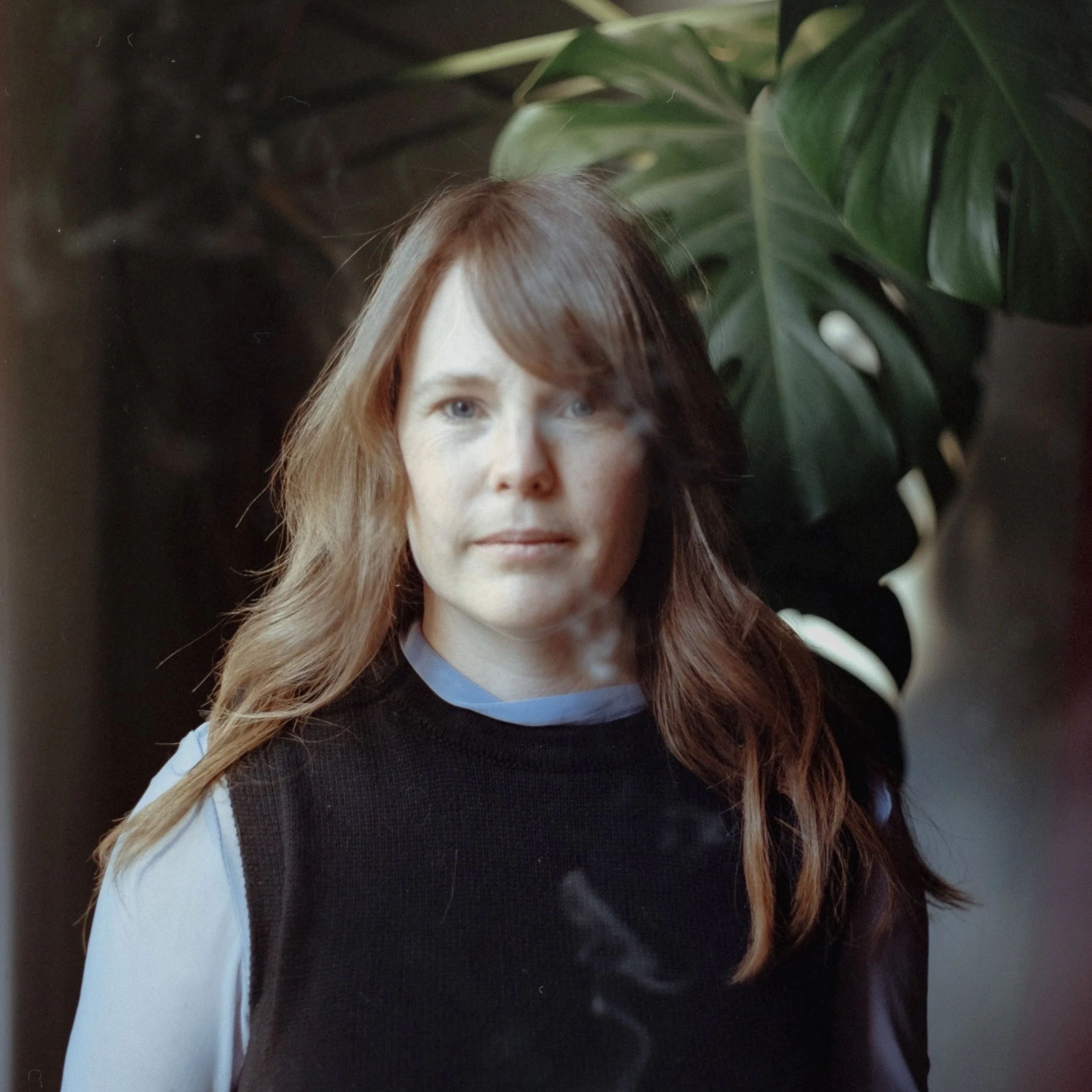
Congratulations on your upcoming debut solo album, Painted Light! Can you tell us a bit about the inspiration behind the album?
Thank you! Painted Light is a collection of songs exploring love and grief; their duality and the inner tension of sometimes feeling those emotions simultaneously. It’s a lot of my own introspection related to love and very much inspired by becoming a mother and the love you feel for your child.
Your musical journey ranges from performing in an Australian circus clown band to Edinburgh’s traditional folk scene. How have those contrasting environments shaped your sound and songwriting?
Many moons ago I studied circus at the National Institute of Circus Arts in Melbourne and while I was there we had a clown band and it was just the best fun. At some point I realised that music was really what I wanted to do more. A few years later I found myself in Edinburgh, Scotland and I immediately felt at home. The way folks tell stories there, the history of balladry and songwriting, all set within this totally different living and breathing landscape; it really opened up a different set of dreams and ideas and possibilities. It’s maybe a very small element of the direction that this record ended up taking, but fiddle tunes, harmonies and traditional ballads really feel like a big part of music that deeply speaks to me and inspires me to make music.
Painted Light was written and recorded in the quiet windows of your daughter’s nap times. How did those brief domestic pauses influence the mood and sonic personality of the album?
The practicalities of trying to make this album whilst caring for my daughter full time were hugely challenging. We don’t have any family in Scotland and so my partner had to take time from work in order for me to be able to go off and spend time arranging and recording. I wrote mostly while my daughter napped because whenever I got my guitar out or sat at the piano while she was in the room she would yell at me to stop or want to play herself. I was also just so tired that I physically struggled to have the energy to use my brain creatively, so with the songs that I wrote during this time, I didn’t have the luxury of sitting with them for months or playing them live with a band again and again. Some of them had only been played a handful of times before we went into the studio. There wasn’t time to overthink things and there was an element of protection of the original idea and soul of the song. So, it’s a real snapshot; a miraculous thing to have made to mark this moment in time with my daughter.
Grandmother Kind explores matrilineal legacy and belonging to a line of women. What was it like bringing such personal family histories into your music?
We named our daughter after my late grandmother, who had such a profound influence on my life. She was always playing music even though her own musical ambitions were constantly sidelined in favour of her brothers' simply because of her gender. Despite never receiving those same opportunities, she played the piano and wrote songs right up until the end of her life. Bringing a little bit of my grandma into the music was a really natural way to weave her legacy into the story of love I have for my daughter. Having said all that, it’s also felt quite a vulnerable thing to share publicly!
Tracks like Modern Girl tackle navigating feminism and ambition in late-stage capitalism. How do you balance those broader social commentaries with personal, intimate storytelling?
‘Modern Girl’ comes from very honest, lived place and I think the social critique and broader social commentaries don't really live in an abstract vacuum; they're rooted entirely in personal, intimate storytelling. Modern Girl is about contemplating the exhausting tightrope of modern womanhood and this illusion that we can have it all if we just try hard enough. It’s a difficult hand and one that many women receive whilst undergoing matrescence - this very personal rite of passage and metamorphosis. It’s an extremely complex experience to feel an intense love for your child but also be crazy with rage that you are left alone to raise them in a world that prefers you stay quiet.
I think if you write about yourself or other women in your life; the quiet weights that are carried, they are actually really personal and intimate stories where the broader political and feminist reality takes care of itself.
You worked alongside artists like Humbird, Moteh Parrott, and producer Graeme Young. What was the collaborative process like, especially during a time when your creative hours were so constrained?
It was a lot of chaotic logistics, like a massive puzzle of conflicting timetables that I somehow managed to piece together! When your creative hours are that constrained, it completely shifts how you work. You don't have the luxury of overthinking or second-guessing; it forces you to make decisions quickly and just trust your gut. It also forces you to work with the tools you have. Sure, it’d be lovely to have a string quartet playing this part in the arrangement but can we organise that in the next 30 minutes? Also, working with collaborators who I had worked with previously meant that there was an amazing lack of pretence, we had to dive straight into the emotional core of the songs without wasting much time. I will also say that while we were making the record, I was living above a vegan donut shop and so donuts were a very important part of the collaborative process.
You’ve made a conscious decision to bypass AI-driven streaming algorithms by choosing platforms like Bandcamp, Subvert, Qobuz, and Tidal. Why was this move important to you as an independent artist?
As an independent artist, I’m much more interested in intentional community. I’d rather connect directly with a smaller group of listeners who genuinely care about the human heart and labour behind the work, rather than feeding a machine that treats art like disposable background data. I’m deeply opposed to the push toward artificial intelligence in music, as well as the broader corporate trajectory where streaming profits are funnelled into things like military AI and defence tech.
For a long time, independent artists have been told we just had to accept these platforms as a necessary evil because of the reach, but the math and the morals don't add up for me. When a platform's leadership is actively pouring millions into automated surveillance and defence tech while artists are left fighting for fractions of a penny, the illusion shatters. Opting out for spaces like Bandcamp, Tidal, or Qobuz isn't just about finding better compensation or higher audio quality, it's a refusal to let algorithmic convenience override basic human ethics. I want my music to live in places built by people who actually value culture, not tech monopolies trying to automate it out of existence.
With Painted Light releasing on October 2, what do you hope listeners—and particularly other parents—take away from this collection of songs?
I think when you see yourself in a song, or when you hear something that hits at that shared, messy experience of being alive, it can make you feel a little less alone. I really hope that these songs can do that for listeners, and especially for other parents navigating the heavy, beautiful shift of matrescence, that they can find a reflection of themselves in these tracks. I hope people find beauty in it, and ultimately, I hope it reminds listeners how wild it is to be here on a small planet in the universe carrying such limitless capacity for love.
Sarah Irvine - Painted Light Out now