
A Quick Chat with olza
Can you tell me a bit about your inspiration for your single ‘sleepingpeacock’?
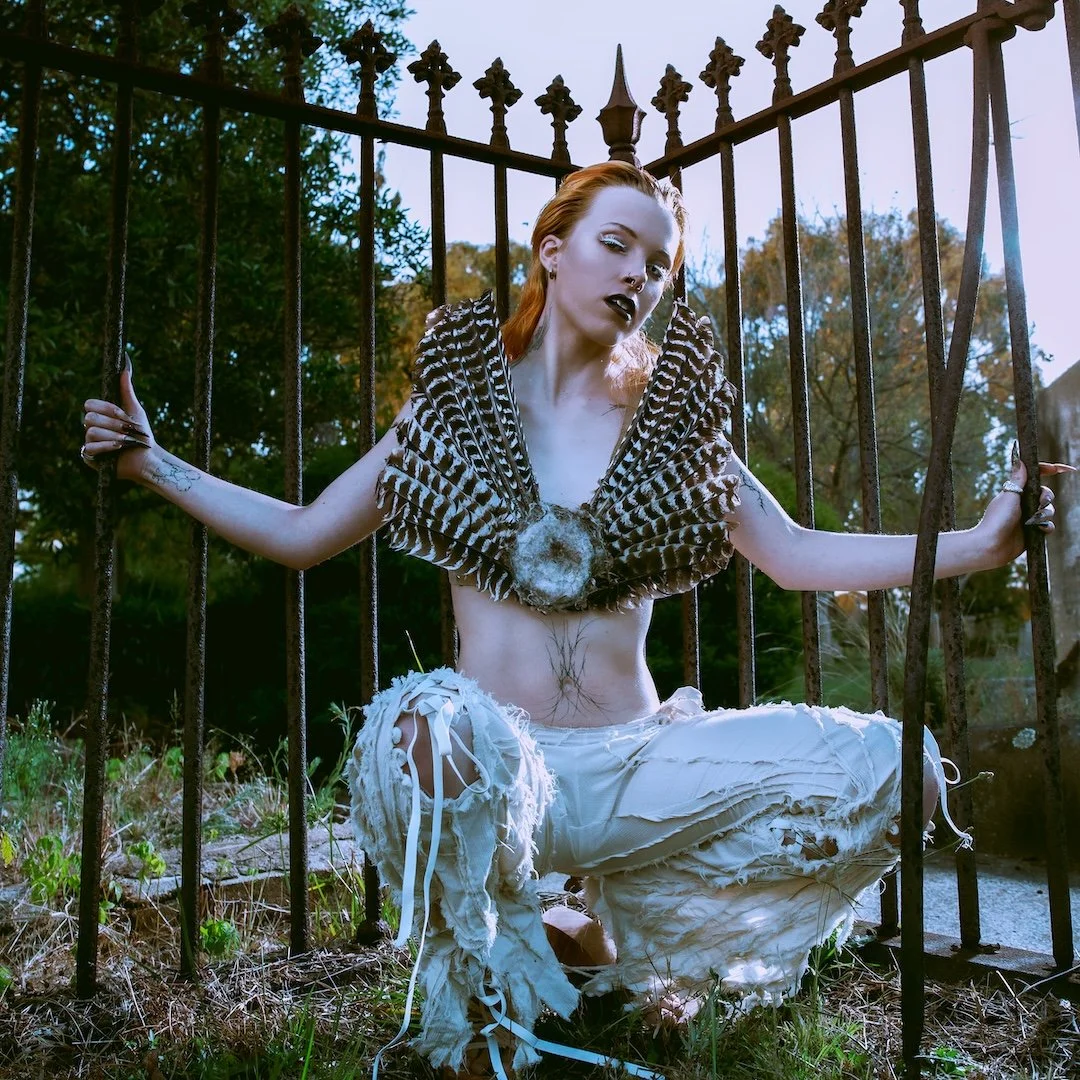
‘sleepingpeacock’ explores the overstimulation of racing thoughts and the chaos of an anxious headspace. At the same time, the peacock becomes a symbol of rebirth and renewal; an elegant creature whose beauty is matched by its power, confidence, and strength. For me, self-doubt often shadows my artistry, tucking away that confidence, even if only temporarily. The song’s sonic release mirrors the act of shutting out mental noise and finding stillness and following the journey from anxiety to clarity, driven by a determination to protect one’s art and push beyond doubt. It’s been a deeply healing experience and a song that holds a lot of meaning to me and I’m so thrilled to finally release it into the world.
What are your influences and how do they affect your songwriting?
Many of my influences come from Europe, particularly the Scandinavian region. Artists like Bjarki and Lanark Artefax deeply inspire me with their intricate sound design and textured IDM atmospheres. I also draw a lot from artists such as FKA Twigs, Eartheater, and Björk, all of whom have shown that there's space in the music industry for truly unique and experimental voices. What resonates with me most about these artists is their approach to vocals. Each has their own way of pushing vocal boundaries — whether through unconventional techniques or sonic manipulation. That’s been a huge influence on how I treat my own vocals, especially in terms of sampling and transforming my voice into something unfamiliar and otherworldly. Lyrically, I gravitate toward writing in an indirect and mysterious way. I love creating space for listeners to project their own meaning onto the music; to interpret the words through the lens of their own experiences. It’s that ambiguity and openness that I find most powerful in songwriting.
What’s the creative process like for you?
My creative process usually starts with laying down a foundation — typically a drum beat and some chords. Once that’s in place, I begin experimenting with melodies, looking for something that not only fits but also contrasts interestingly with the instrumentation. When I’m improvising melodies, I like to record everything, even if most of it comes out as gibberish. Surprisingly, within that chaos, I often find words or phrases that resonate with me; little fragments that become the foundation for poetic and meaningful lyrics. From there, things tend to get a bit scattered. I start layering sounds based on what I hear in the moment, which can lead to an overload of ideas. At that point, I usually need to take a break; to step away and let my ears reset. With a fresh perspective, I go back to the session to strip back unnecessary textures and bring more clarity to the track. Texture is a huge part of my music, especially through vocal sampling. I love manipulating my voice in strange and unique ways, often to the point where it doesn’t even sound like me. That’s probably my favourite part of producing: transforming something so raw into something entirely new.
If you could change something about the Australian music industry, what would it be?
I want to shift the perception of experimental music. I feel it doesn’t receive the recognition it deserves. Each artist in this space brings something completely unique — no two sounds are the same, because the genre is so broad and boundary-pushing. In contrast, mainstream music often has a more commercial appeal, largely because of its familiarity and the comfort it brings from being part of our upbringing. In Australia, experimental music isn’t as widely accepted or supported as it is in other parts of the world, which is something I hope will change. There’s an incredible underground scene here, full of emerging artists doing truly original work. But often, it feels like the path to success means finding recognition overseas first — and only then does the local scene begin to take notice. I’d love to see that reversed, with Australia embracing its own innovation in real time.
What do you think life would be like for you if you didn’t have music as an outlet?
Honestly, it’s hard to say exactly. Music has been a core part of my identity since I was young — I truly can’t imagine where I’d be without it. It’s carried me through so many emotional moments and experiences, and it’s what continues to drive my songwriting and shape the entire vision behind Olza. If I had to choose a specific path outside of being an artist, I think I’d still be connected to music in some way — likely as a music therapist. To me, music is deeply healing, and I’d want to use it to help others heal and grow too.
What’s your advice to young people who want to make a career for themselves in the industry?
I think a lot of artists say this, but pushing through the self-doubt that builds up when comparison comes into play. That’s been a huge challenge that I’ve slowly learnt to ignore as an afterthought. One quote from Björk that strongly resonates with me and keeps me grounded in my work is “the soul comes first, and the craft is to assist the soul to express yourself.” To me, I create my art with intention and how it makes me feel, and block out the paranoid ideation of what the audience wants to hear. That’s where I get creatively blocked, whereas once I’m in a flow, it’s purely based on influential music I’ve listened to recently and allowing creative freedom rather than over thinking the ideas at play.
Any upcoming shows?
Yes! I have one upcoming tomorrow night. It’s an intimate screening event and live performance for my single ‘sleepingpeacock’ at Sanguin Studios. I am also curating an event at Bell City Takeaway with one of my artist friends, FORNER, for the 25th of October. This event is curated for up and coming independent, smaller artists who are paving the way for experimental sound, art and movement. I’m seeking many more gigs to be booked down the track as well!