
A Quick Chat with DUEL NATIVE
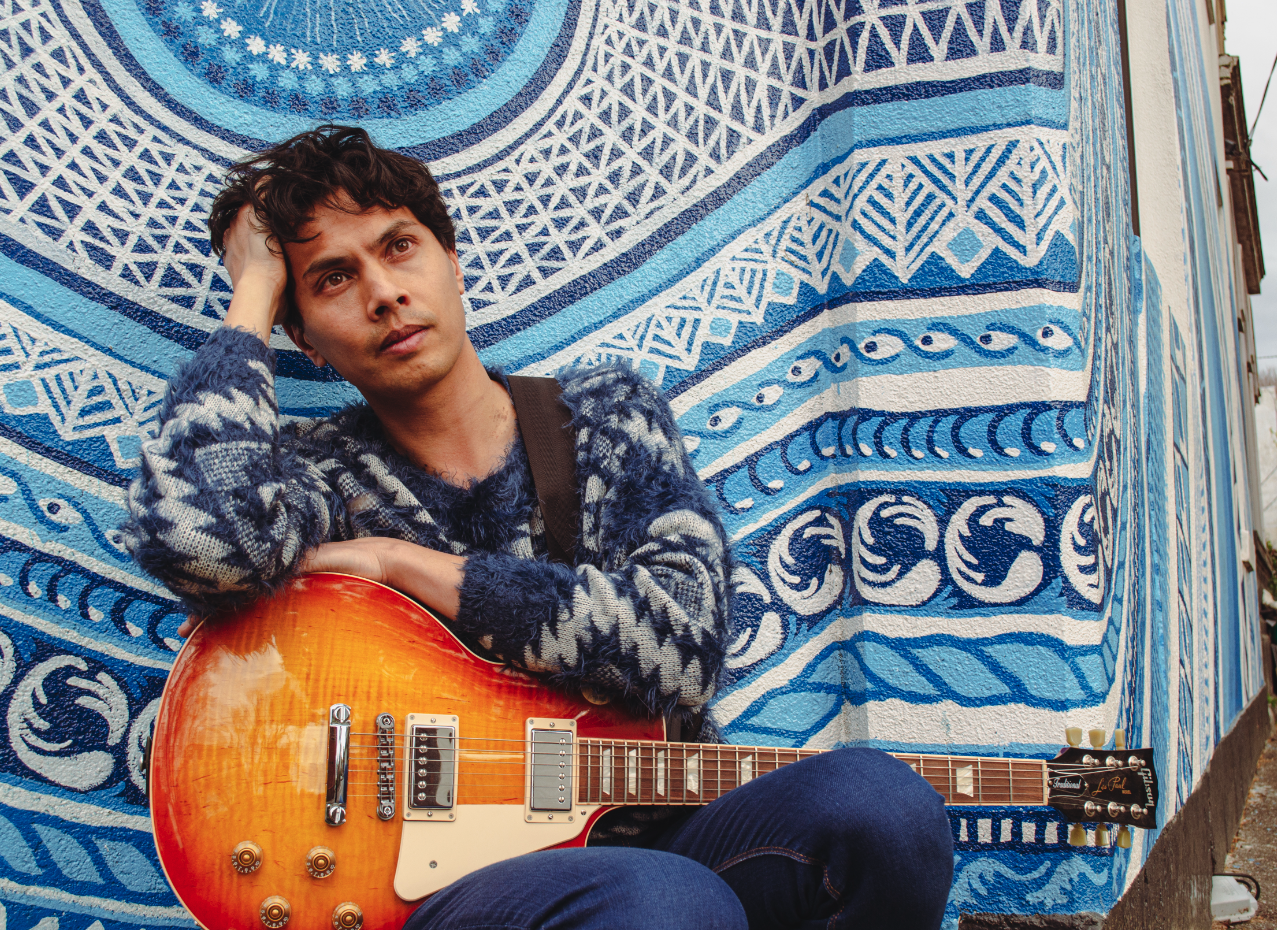
You’ve said that 'AI' stands for 'Always Imperfect'. Was there a particular moment in the creative process that made you realise imperfection was something to celebrate rather than avoid?
I have been known as a bit of a perfectionist, and it's not a positive thing in my opinion. Perfection is debilitating; it is a sort of guarantee to always feel unhappy because, you know, the idea of a piece of art is often going to be more perfect in your mind than your possible execution of that idea. You know, when I go to karaoke, my favourite people to take to karaoke are not the people who can sing, but the people who just love having fun and who get everyone else involved. Because that's the most fun you'll have at karaoke. Even as singers, think about all the fun times you've had at karaoke, right? You don't think, "Oh, the most fun was the time when I sang I Will Always Love You by Whitney Houston and, you know, I really nailed it and I hit all the high notes." No, it was the time where your mate fell off the couch when they were doing the backing vocals to I Want It That Way by the Backstreet Boys. The memories are actually of everyone laughing and singing together—which, by the way, is guaranteed to be imperfect from a singer's perspective, but perfect from an experience perspective. So back to your question! There wasn't a particular moment in the creative process as much as it was a moment in life where I was becoming quite unhappy and stifled and resistant, to the point where I stopped even being creative because my desire for perfection was actually stopping me from even trying. And so this EP was really that licence to put something out publicly that is overtly imperfect, and it's work that makes me cringe in places, and, you know, it's alright. Not many people, particularly in the music industry, would necessarily suggest artists do that, but that's one of the joys of being an artist in today's age. You don't actually need that permission from others; in this case, it was really permission for myself.
This EP is built from live takes—no digital polish, no overproduction. What was the biggest challenge and reward of capturing that rawness on record?
Well, sound is always a bit of a challenge. Like, for one of our tracks, the last one on the EP, One Street Back, we recorded it from the mixer in a rehearsal room, from a single output into a laptop. There were no effects. We could barely control the levels. You couldn't, you know, go back and cut and paste parts you messed up. There's no post-production at all, other than mastering. And I love that. In fact, we didn't even know we would release it when we were recording it. Yes, that is a challenge, because if you want to make any changes afterwards, you can't easily do that. But that is what I really enjoyed about it; that rawness was, for me, very rewarding as well as fitting.
Your music has been described as ‘less like a concert and more like a communal ritual’. How intentional is that atmosphere when you perform or record?
I've got to say it's very intentional. It has always been really intentional to make DUEL NATIVE shows a participatory experience and not a polished, one-way transaction. The live shows are never just a straightforward "we're going to play you some songs, and you're going to listen to them, and then you're going to clap after each one." I think it's actually about bringing people together and inviting people to be part of that. And that's really, really important to me. There are a lot of bands that I've seen where they're kind of performing at you. And I think as an indie artist, it's just not really sensible in the long term, to come at it with that kind of attitude. From the recording perspective, the process with this EP was really about just allowing a moment to exist in that moment and not thinking about the fact that it was being recorded. The recordings were really a sideshow to the overall experience. A lot of it is to do with trying to subversively capture that experience and less about trying to replicate something you had already predetermined. It's like when you go to any artistic venue these days—most people are documenting their experience rather than experiencing the experience. You go to pretty much any performance of any kind—an art gallery, for example; more people are videoing themselves with the art than they are actually just enjoying the art. And then that just plays into that overall narcissism that we have in our society now, compounded by social media. You know, there's a reason why Halloween has become so huge. It's because our society is missing or has lost a lot of our rituals, and I think that gives us a sense of loneliness.
Having come from the UK indie scene with Greyhound Green, what lessons or contrasts have you noticed between making music in London and now in Naarm (Melbourne’s) creative community?
Well, London is very competitive, firstly. There is extremely high-quality art, and lots of it, and every night of the week there will be multiple shows in multiple venues in multiple suburbs. And that means that what you have to do is be far more deliberate, which is something I've brought with me to approaching shows in Australia. Overall, one lesson is: if you want to enjoy a musical career, you have to do that in a way that can be sustained. It can't just be fireworks and, you know, hoping for someone to notice them one day! For me it's about having consistency and a passion for it that comes from the heart, because burnout is so, so quick. I find I have to practise in a way that comes from a place of love and a place of self-care.
There’s a clear emotional honesty that runs through your songs. How do you create space for vulnerability, both for yourself and the musicians you collaborate with?
Well, I'm actually scared a lot of the time to show my songs. Almost all of my songs were written when I've been by myself, where I felt safe in a place and when I'm not being listened to. And it's often a meditation. Half of my songs these days come from dreams, you know! I don't write hundreds of songs every year. Sometimes there's huge gaps of many months between writing one song and another, and sometimes there's a whole flurry. I'll take a long time over a song. I'll meditate on it for a long time, and it will evolve and change before a moment in time when it will get recorded. For me, it isn't a numbers game; it's not about writing as many songs as possible and then choosing the one most likely to be "successful". And with musical collaborators, I need to be able to trust those humans to be receptive and sensitive and respectful because putting yourself out in the world is hard, and if you can't do that within an inner circle of trusted people, then it's very dangerous to go beyond that. And I have had situations where I've written something and people within the room have been really disrespectful. I've learned that those people are always the people that don't write music themselves. And they don't experience that vulnerability, because if they did, they'd know how difficult—how f****** hard—it is to be vulnerable sometimes. Vulnerability is something that is to be cherished because I think that's where, for me anyway, my best work has come from.
Looking ahead, do you see Always Imperfect as closing one chapter for DUEL NATIVE or opening a new one—perhaps toward more experimental or narrative-driven work?
The easy answer is both. For me, these were songs I just really wanted to record. And they were a moment in time of being in a place and having specific collaborators around me in Naarm (Melbourne) at the time, and wrapping a bow around it, and presenting that into the world. And so that is the closing of one chapter. And it was really important for me to do that before leaving Melbourne. But the process has also opened up my eyes to something new, recognising that there are ways that I might approach my own music and writing process in a more evolved way. And so it is a new chapter in a sense. I think that if you don't release this thing that you've been holding on to, you almost create a blockage for yourself. You can't allow anything else in if it's already full, so you have to close one chapter in order to begin the next. And so the answer is obvious, I guess: when you end one chapter, it is signifying the start of the next chapter—unless it's the end of the book, you know, in which case maybe you've died or something.